The Evolution of Miyamoto Musashi: From Brutal Samurai to Master of Self-Discipline
Introduction
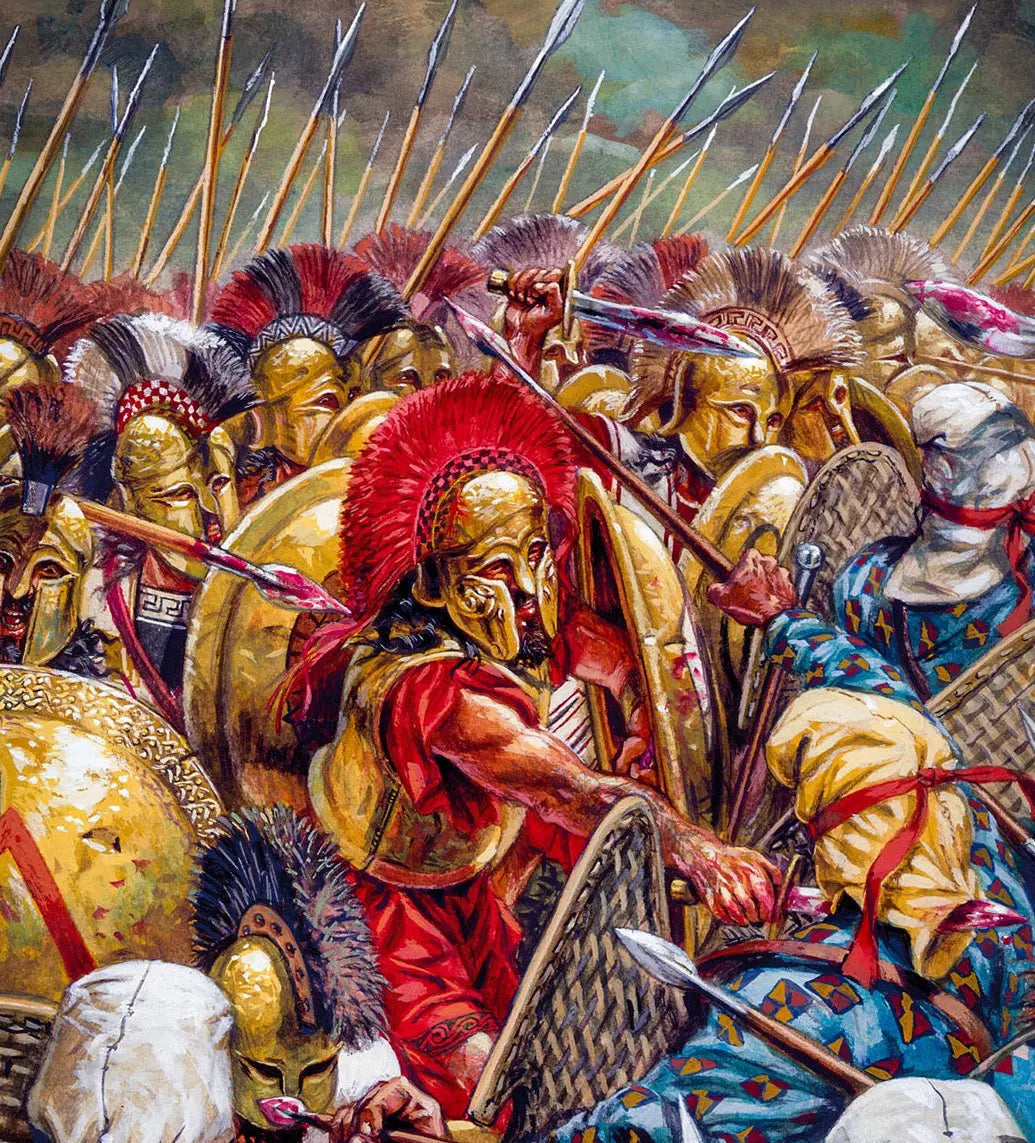
Introducing himself in his 'Book of 5 Rings', Miyamoto was born in 1584 in the Harima province of Japan, located in Western Honshu seen below. This was a period in Japanese history known as the Sengoku period, which translates to the 'warring states era'. Growing up in this time of constant civil war, the samurai culture was at its most brutal and raw. Famous war lords like Oda Nobunaga had not long before changed the face of the Samurai culture, introducing strategy & modern warfare. War had changed and innovation had become a necessity.

Samurai warriors now fought in disciplined formation, planned castle sieges became common, and the ability of warriors became more important than their lineage. This shifting environment greatly influenced young Musashi's mind. He searched for a way to balance tradition and innovation, and understood he needed to evolve if he wanted to survive.
Early Life and Childhood
His mother had died early on in his life. His father, Shinmen Munisai, described in historical accounts as a renowned master of swordsmanship, was known for his harsh discipline. Munisai began training young Miyamoto in the traditional Samurai methods. As historian William Scott Wilson notes in his biography of Musashi:
"Training for boys in samurai households was harsh. Failure and hardship were seen as necessary foundations for strength."
As a boy, Musashi is described as large for his age, socially difficult and hard to discipline. At age 7, his father struggling to handle Musashi, resolved to send him to a temple run by his uncle, Dorinzo - a buddhist monk. In the temple is where silence, chores, and strict discipline channeled his fierceness into structured power. By thirteen, after years of calligraphy, meditation, and informal weapon practice, he emerged with a steadier mind and a warrior’s instinct.
The First Duel - Aged 13
In his book, Musashi quotes:
"From youth, my heart has been inclined toward the Way of Strategy. My first duel was when I was thirteen, I struck down a strategist of the Shinto school"
When Musashi speaks of the “Way of Strategy,” he speaks about the deeper art of understanding conflict — timing, rhythm, psychology, and the ability to adapt faster than an opponent. Even at thirteen, this meant controlling distance, breaking an opponent’s rhythm, seizing initiative, and turning his natural strengths into decisive action. Duels in the Sengoku era were short and brutal, won not by brute force but by awareness and measurement.
His first opponent, Arima Kihei was a wandering swordsman of the Kashima Shinto-ryu school. While Musashi’s uncle attempted to call off the fight due to his nephew's age, the young Musashi had no intention of backing down. When the two met, Musashi ignored the formal apologies being made on his behalf and instead charged Kihei with a six-foot wooden staff, catching the seasoned warrior completely off guard.

The duel was brief and brutal. Kihei drew his short sword, but Musashi’s speed and raw aggression overwhelmed him, allowing the boy to throw the samurai to the ground. While Kihei struggled to regain his footing, Musashi struck him repeatedly between the eyes with his staff, killing him on the spot.
Choosing the path of Ronin
After his first duel, Musashi became a ronin-child. A ronin was a masterless samurai, warriors with no lord who wandered Japan in search of work or purpose. While most ronin were created by misfortune, losing their status after a lord’s death or dismissal, Musashi chose this path voluntarily and far earlier than most. From adolescence, he lived as a self-directed wanderer, rejecting the norms in a culture that valued obedience and lineage. He dedicated his purpose to the ‘Way of Strategy’ with singular devotion, not to serve a master, but to sharpen himself—perfecting his awareness, timing, and skill through direct experience rather than tradition.
Musashi continues in his book:
"After that, I went from province to province, duelling with strategists of various schools, and not once failed to win even though I had as many as sixty encounters. This was between the ages of thirteen and twenty-eight or twenty-nine"

A record of over sixty duels without a single defeat is almost unimaginable in Musashi’s era. These were life-or-death encounters against trained swordsmen, fought without rules, decided by a single misstep. His undefeated record is proof not just of skill, but of the philosophy he lived by. While most warriors clung to schools, forms, and hierarchy, Musashi walked the road alone, studying his strengths, rejecting anything that didn’t serve him, and building a style shaped by real combat rather than tradition. His choice to defy societal norms paid off; he became a master by realising his natural inclination towards strategy and using self-discipline to perfect this skillset.
Legendary Final Duel Against Sasaki Kojirō
Musashi’s most famous duel took place in 1612 against Sasaki Kojirō, the master of the Ganryū school and one of the most feared swordsmen of his time. This was a meeting between two men at the height of their skill. Musashi employed strategy long before the sword was drawn to distract his opponent.
He arrived hours late on purpose, knowing it would unsettle Kojirō and break his rhythm. On the boat to the island, he carved a wooden sword longer than Kojirō’s own blade, turning his opponent’s greatest advantage into a weakness. When Kojirō attacked with his legendary sweeping strike, Musashi stepped inside the arc, disrupted the timing, and killed him with a single blow.

The duel is remembered for Musashi’s unconventional strategy and dishevelled look upon arriving at the scene. He controlled the timing, the distance, the emotional tempo, and ultimately the entire fight. Kojirō perfected technique; Musashi mastered strategy. And that mastery, the ability to shape the moment before it arrives, is what made him the greatest swordsman of his age.
The Turning Point
One of the most intriguing parts of Musashi's life is the switch from a brutal Samurai to a master of self. He stopped duelling around age 29, after his victory over Sasaki Kojirō. From that point onward, he abandoned life-or-death combat and turned inward, devoting himself to strategy, teaching, and self-mastery. In his book, he mentions:
"When I reached thirty I looked back on my past. The previous victories were not due to me having mastered strategy. Perhaps it was natural ability, or the order of heaven, or that other schools' strategy was inferior. After that I studied morning and evening searching for the principle, and came to realise the Way of strategy when I was fifty."

Despite defeating more than sixty men and becoming the most feared swordsman of his age, Musashi looked back at thirty and concluded he had barely begun. This is the paradox of true mastery: the higher he climbed, the more he saw how far the path stretches. Musashi realised that talent, instinct, and even victory had fooled him into thinking he understood strategy. In truth, he had only scratched the surface.
Twenty more years of seeking
After leaving the world of duelling, Musashi spent his thirties wandering Japan as a quiet ronin, deliberately stepping away from fame at the height of his power. Instead of seeking challengers, he sought understanding — watching how different schools trained, how warriors moved, and how human nature revealed itself under pressure. This period softened the wild aggression that defined his youth and began shaping a mind that valued perception over force.
In the decades that followed, Musashi immersed himself in painting, calligraphy, sculpture, and Zen practice. These arts were tools that trained his spirit. Brushwork taught timing; meditation taught stillness; sculpture taught patience. Through them, he learned to control the inner turbulence that once drove him into conflict. The man who once lived by instinct now learned to live by awareness.

By his forties, Musashi was teaching students and refining Niten Ichi-ryū, his two-sword school. He analysed rhythm, timing, and psychology with obsessive discipline, searching for the core principles beneath all technique. Only at fifty did he write that he finally understood strategy. His transformation was complete: the ferocious young duelist had become a calm master of self.
Later Life
After reaching fifty — the age at which he said he finally grasped the true Way of Strategy — Musashi entered the last and most peaceful phase of his life. He no longer wandered restlessly across Japan. Instead, he lived with intention, clarity, and a calmness that would have been unrecognisable in his youth. Musashi spent these years moving between the protection of friendly domains, offering guidance to young samurai and refining the principles he had spent a lifetime uncovering. His days were devoted to teaching strategy, studying nature, and distilling everything he had learned about combat, psychology, and perception into a philosophy that could endure beyond him.

In his sixties, Musashi accepted an invitation from the powerful Hosokawa clan in Kumamoto. There, he served as a teacher, advisor, and elder strategist — a recognition of the wisdom he had become known for. He trained their swordsmen, mentored promising retainers, and continued practicing the arts he had embraced during his middle years: painting, calligraphy, poetry, and the quiet disciplines that sharpened his sense of rhythm and presence. This was the period where Musashi’s calm demeanour, humility, and restraint became as legendary as his duels.
The Final Years of the Samurai Legend
Near the end of his life, as illness began to take hold, Musashi withdrew to Reigandō Cave, a secluded hermitage overlooking the countryside. There, sitting alone in stillness, he wrote The Book of Five Rings as a summary of his life findings on perception, timing, leadership, and the mastery of the self. His final work, The Way of Walking Alone, captured the principles he lived by in old age: independence, clarity, simplicity, and detachment from anything that weakens the spirit. Musashi died in the cave in 1645, seated upright, brushes and weapons at his side. The ferocious warrior of his youth left the world as a philosopher — a man who had conquered not only sixty opponents, but the far harder enemy within.